

Space Frame System

Space Frame is a structure of linear elements arranged in a configuration that internal forces are transferred in a three-dimensional manner. It can be produced in steel, aluminum, and stainless steel.
Domes & Skylights 〉
Domes & Skylights is like a horizontal window or opening place in the roof to admit natural daylight or to give a clear vision of the sky at night. Materials used for admitting light or to provide vision can be glass or acrylic sheets depending upon the project requirements Framing members supporting such type of materials can be either aluminum profiles or steel framing suitably treated to avoid corrosion. While acrylic domes provide even light distribution throughout the day, Skylights & domes admit more light per unit area than windows and distribute it more evenly over a space.


Architects often add domes or skylights to their designs because these elements bring together beauty, function, and symbolism in a single form. A dome instantly gives a building a sense of grandeur and identity, creating an impression of openness and harmony. Skylights, on the other hand, fill interior spaces with natural light, reducing dependence on artificial lighting and enhancing the overall atmosphere. The presence of daylight transforms how people feel in a space — making it brighter, more uplifting, and more connected to the outdoors.
Beyond their visual appeal, both domes and skylights contribute to energy efficiency and comfort. Skylights allow natural ventilation, helping warm air escape and cool air circulate, which improves air quality and temperature balance. This natural system lowers energy use for lighting and cooling, aligning with sustainable architectural practices. Domes, often seen in spiritual or monumental structures, carry deep cultural meanings, symbolizing elevation, unity, and a connection to the heavens.
In any context, whether a home, mosque, or public building, these features create spaces that feel alive and inspiring. They blend practicality with artistry — allowing light, air, and meaning to flow together in harmony.
Canopies and Entryways 〉
Canopies create an aesthetical effect to the building architecture, be it used at the entrance of the building or as a decorative feature in the roof. It usually consists of steel structure with aluminum cladding or steel structure with spider glazing/point fixed glazing or combination of both or with tension cables and rods to give more sophisticated look to the facade. The advantages of using the canopy at the main entrance are that the entrance to the structure does not sustain direct weather harshness.
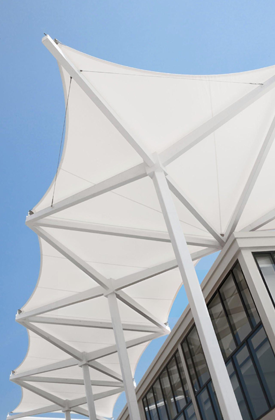


Canopies and entryways are essential in buildings because they serve as the first point of interaction between people and architecture, blending practicality with design intent. A canopy offers a layer of protection and comfort, shielding visitors from harsh sunlight, heavy rain, or wind while they enter or exit the building. It creates a smooth transition between the outdoor environment and the interior space, allowing people to pause, gather, or orient themselves before stepping inside.
Beyond their functional role, canopies and entryways play a powerful aesthetic and psychological role. They define the identity of a building — marking its entrance with clarity and elegance. A thoughtfully designed entryway gives a sense of arrival and welcome, setting the tone for what lies beyond. It can reflect the character of the architecture — bold and modern, soft and organic, or traditional and dignified — guiding visitors’ first impressions.
Moreover, these elements help with wayfinding and spatial organization. In large complexes or public structures, a prominent canopy or clearly designed entryway signals where to enter, making navigation intuitive. They also contribute to environmental performance by offering shade, reducing heat gain near entrances, and improving energy efficiency.
In essence, canopies and entryways are not just decorative additions — they are vital architectural features that protect, guide, and express. They bring together human comfort, visual harmony, and functional purpose, turning the act of entering a building into an experience of transition and welcome.